February is American Heart Month. Heart disease continues to be the number one killer of men and women in the United States.
This month we are going to focus on hearth anatomy, function (physiology) and the risk factors for heart disease. This will include student activities, lesson plans, worksheets, and more.
This is part of an ongoing series on the human body.

The heart is a powerful pump.
The heart pumps blood around the body with enough pressure to open the valves to exit the heart AND still have enough pressure to be returned to the heart.
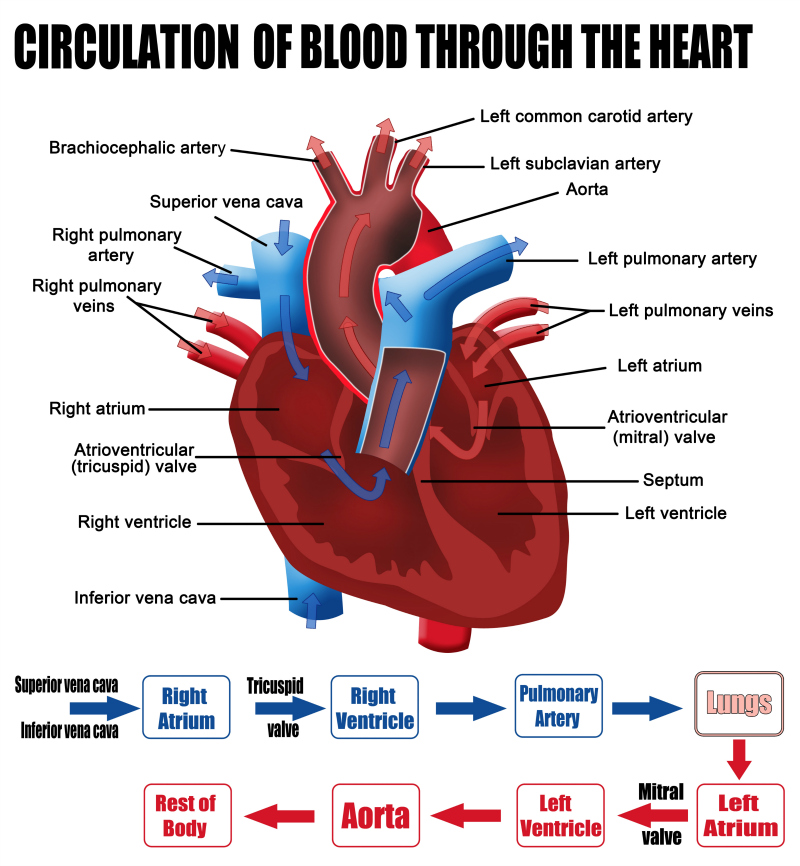
The human heart has 4 chambers. There are 2 receiving chambers and 2 pumping chambers.
The receiving chambers called atria.
The pumping chambers called ventricles.
What are the parts that make up a human heart?
The heart divides into a right and left side. The right side associated with the pulmonary circulation and the left side associated with the rest of the body or systemic circulation.
The four chambers of the heart:
- right atria
- right ventricle
- left atria
- left ventricle.
Looking for teaching resources for the circulatory system?

Our circulatory system depends on the blood moving in a single direction. To keep backflow from happening we have valves. There are 4 sets of valves to prevent backflow into the 4 separate chambers.
The Valves
There are the
- tricuspid valve
- pulmonary semilunar valve
- bicuspid/mitral valve
- aortic semilunar valve
The tricuspid valve is between the right atrium and right ventricle.
The bicuspid or mitral valve is between the left atrium and left ventricle.
A quick way to remember is RAT LAB. Right atrium tricuspid and left atrium bicuspid
The semilunar valves are actually at the base of the large vessels that are connected to the ventricles and exiting the heart. They are both arteries because they are blood vessels that carry blood away from the heart.
The pulmonary semilunar valve is at the base of the pulmonary artery and prevents backflow from the pulmonary artery back into the right ventricle. This blood is deoxygenated because it has delivered its oxygen to the tissues and has not traveled back to the lungs yet.
The aortic semilunar valve is at the base of the aorta. It prevents backflow from the aorta back into the left ventricle. This blood does is oxygen-rich because it has traveled through the lungs to pick up oxygen and is leaving the heart to deliver oxygen to the tissues.
Heart Sounds
The heart makes two normal sounds: Lub/Dub
Lub occurs when the blood hits the closed mitral and tricuspid valve
Dub occurs when the blood hits the closed aortic and pulmonary valves.


American Heart Month
February is American Heart Month, but it means more than just wearing red. It is about raising awareness of cardiovascular risk factors and the need for more research and innovation in the treatment of cardiovascular disease in both young and old. Every February, I raise funds to help support a charity that supports the mission of the American Heart Month.
This year I will be donating 25% of the proceeds from items purchased in my shop to charities that support CHD patients and their families. This is a subject that is very personal to me as I lost my older brother, Michael, to CHD.
There are lots of amazing kids fighting CHD right now and one of my favorite heroes is Finn. Finn had life-changing (for the better) surgery this past fall. After speaking with Finn’s mom, we will be donating to two charities that she recommended: Mended Little Hearts and The Children’s Heart Foundation.
In addition, all of the items related to the circulatory system are 25% off as well. Check out the crossword puzzle and task cards, too.