What are the fundamental skills?

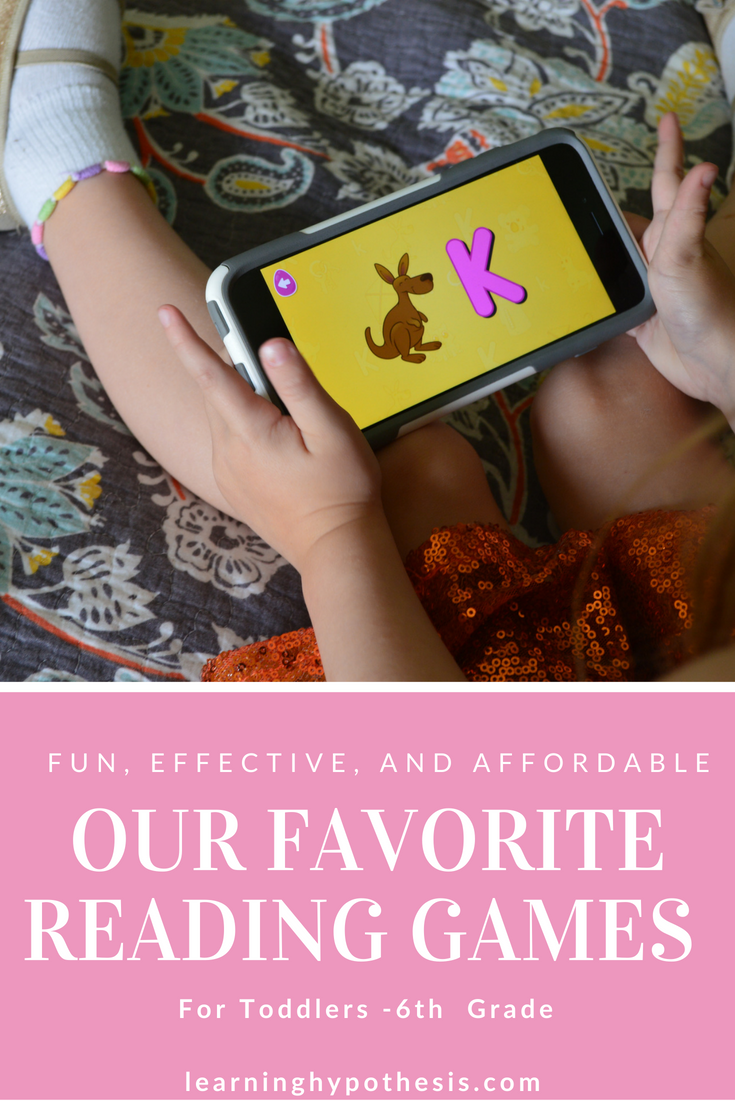
In my last post, I referred to “fundamental skills”. This is a picture of one of my little guys working on skills development. What are the fundamental skills?
That seems to be a good question and one with MANY answers. There are different answers based on the type of skills and the academic area where they will be used. If we consider fundamental skills as being thinking strategies, I think there is a lot of overlap.
What do I mean?
Let’s look at reading. There is a lot of great research out about thinking strategies which help make readers more successful. The list of strategies is written in many different ways and there are modifications, but I like how Steve Peha at Teaching That Makes Sense lists and describes them…
| Reading Strategies | Description |
| Question | Readers ask good questions about the things they read. |
| Predict | Readers think about what will happen next. This helps them organize information and filter out unimportant pieces |
| Infer | Readers figure out things that aren’t actually written in the text |
| Connect | Readers connect to previous knowledge or experience as they read. This creates a framework to insert new knowledge. |
| Feel | Readers have feelings why they read. I am thinking Where the Red Fern Grows – I actually got a tear in my eye when I typed that title. |
| Evaluate | Readers make judgments while they read. This helps them analyze the value and meaning of their reading. |
Now let’s look at the science processing skills. These are skills needed to utilize the scientific method later. There are multiple varieties of this as well.
| Science Processing Skills (Padilla, 1990) | Description of these skills. |
| Observation | Scientists observe objects and events using all five senses. |
| Communication | Scientists communicate their observations verbally, in writing, or by drawing pictures. Other methods of communication that are often used in science include graphs, charts,maps, diagrams, and visual demonstrations. |
| Classification | Scientists organize information by grouping based on similarities, differences, and interrelationships. This is an important step towards a better understanding of the different objects and events in the world |
| Measurement | Scientists measure experimental properties. They compare the property to a defined reference point (often called a unit). |
| Inference | Scientists create explanations or interpretations that are not directly seen in the observations. |
| Prediction | Scientists make predictions. A prediction is making an educated guesses about the future events, based on the observations and inferences. |
I see a lot of overlap when you really examine these skills. The most obvious being that both of these have inference and prediction listed. There are other overlaps. If a student has good questioning skills, he will need to be a good observer and a strong communicator. If he connects and feels when he reads a text he can classify materials and reorganize it in a way that is meaningful. If he is evaluating the text he is using all of those science skills to process the material and then make a decision as to the value of the material he is reading.
This is powerful. This means that we may be able to strengthen a child’s reading and writing via science. Why is that important? It gives you tools. This may be some information about skills and strategies that you did not know. This helps you to evaluate your curriculum and decide the value of the work you are doing. Maybe when you are looking at clouds and talking about them… that isn’t a sidebar, but a real growth experience. Fostering that ability to create connections, classify information, make observations, ask questions, make predictions and inferences, and communicate. All of that can be done via a conversation. Look outside the box… there is lot out there to do and explore. It may all be a little more valuable than we used to think.
Science Rocks!
Padilla, M. J. (1990, March 1). Research Matters – to the Science Teacher . Retrieved August 26, 2011, from www.NARST.org: http://www.narst.org/publications/research/skill.cfm
.