
STEM Challenges and the Engineering Design Process

STEM Challenges the how and why
STEM challenges have become popular in science lessons across the globe and are excellent ways to encourage creative problem-solving. They also naturally use both the scientific method and the engineering design process, which are ways of doing science. The challenges themselves are usually the application of various skills and ideas that students have previously acquired. This test of knowledge in the application is a great way to assess subject knowledge and the often integrated standards around the scientific method and the engineering design process.
What is the engineering design process?

The engineering design process applies when designing an object or mechanism. The scientific method and the engineering design process overlap. In research labs, you will see both applied when investigators are attempting to answer a question. Often new materials have to be engineered to investigate a topic.
The steps of the engineering design process are to:
- Define the Problem
- Do Background Research
- Specify Requirements
- Brainstorm Solutions
- Choose the Best Solution
- Do Development Work
- Build a Prototype
- Test and Redesign
Each age group will focus on different levels of the engineering design process.
The younger kids focus on defining the problem and analyzing their design.
As kids get older, students will develop better skills to refine and retest their idea to create the best possible solution to the problem.
Ways to use STEM challenges with your kids
A quick search on Pinterest will come up with lots of these STEM challenges. The key is to find something that is challenging, but not overwhelming AND applies to the subject at hand. These can be difficult to use at first, but like with most things, the more you do them the better they will run.
Recently we have:
- Built Bridges
- Create Leprechaun Traps
- Designed a Rube Goldberg Machine
- Built Bobsleds
- Created Racetracks for Speed
What about science fairs and other competitions?

The scientific method and the engineering design process are integral to student-centered projects and competitions. When you introduce these projects to your kids make sure to focus on the process rather than the outcome.
Keep in mind that students may need a lot of guidance, but try to let them take the lead. My kids are experts at getting me to do it for them. Don’t be that grown up. Providing guidance without taking over is also a skill that improves with time.
If you aren’t sure where to start, I have a new resource for you. This is a workbook to guide the kids through the process to Design Your Own Experiment.
Design Your Own Experiment: A Workbook for Science Fairs, Projects, and Other Competitions
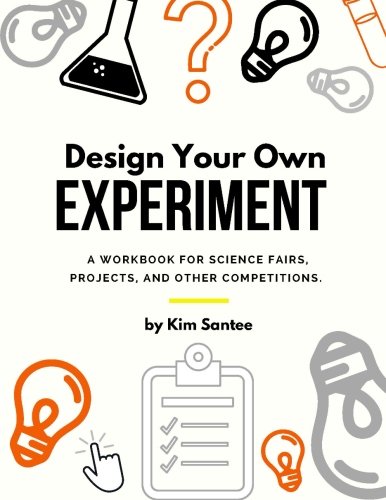
Design Your Own Experiment
A science fair is not a demonstration or a lab activity. A science fair project (or any project that requires that kids design their own experiments) is a completely different animal. The science fair utilizes all of the tools in the SCIENTIFIC METHOD toolkit and usually additional ENGINEERING DESIGN PROCESS ideas.

This book will walk them through the entire project from picking a topic to drawing conclusions. It allows you to help with the adult supervision without being the one that is more invested in the end project.
It stops that overwhelmed feeling of not knowing where to start and gets kids focused right away. There are even 10 project ideas in the very beginning to use as a springboard for their own ideas. If they get completely stuck, I have an entire sample in the book with more projects to check out online.
Need multiple copies? Check out the printable pdf of Design Your Own Experiment.


